

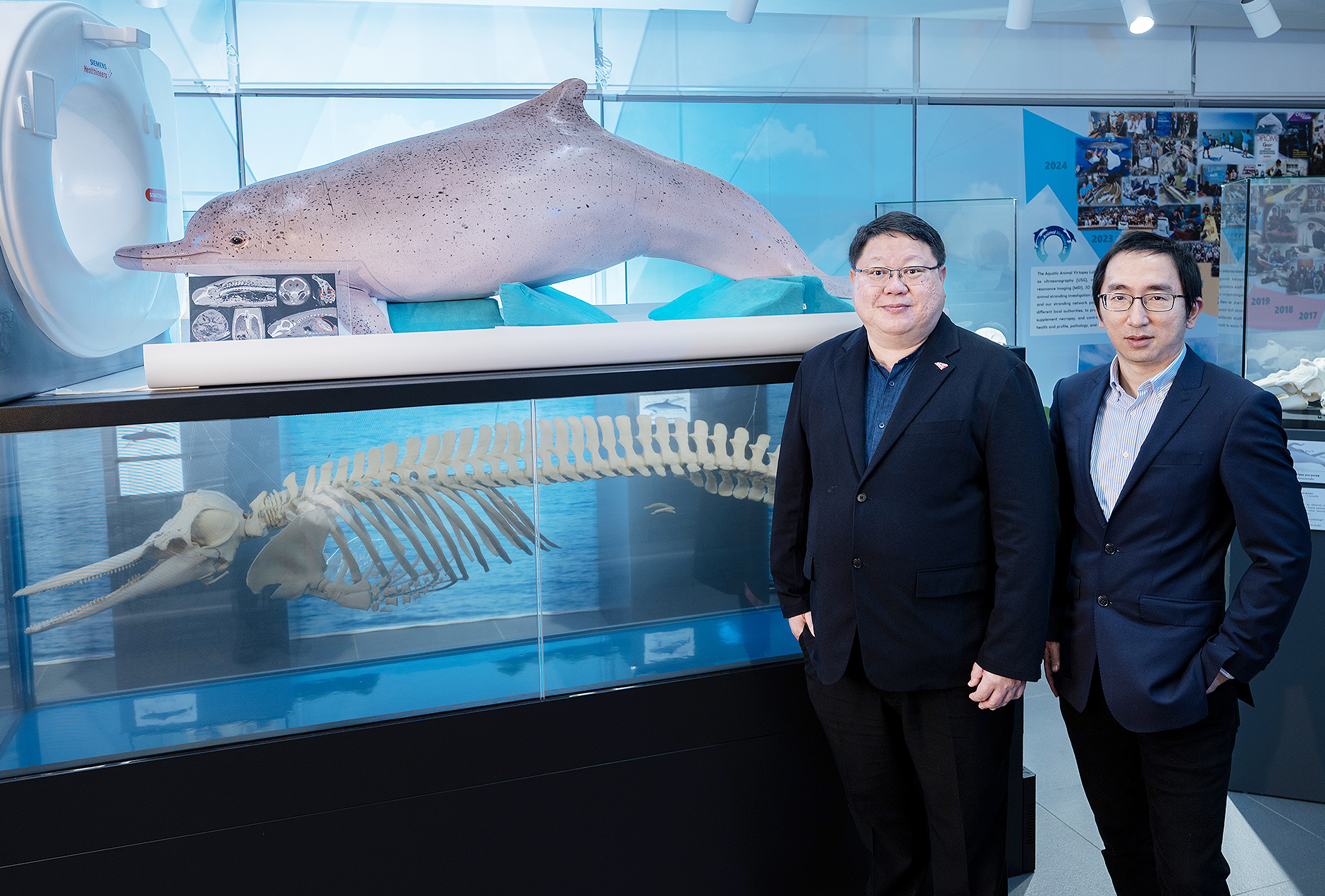
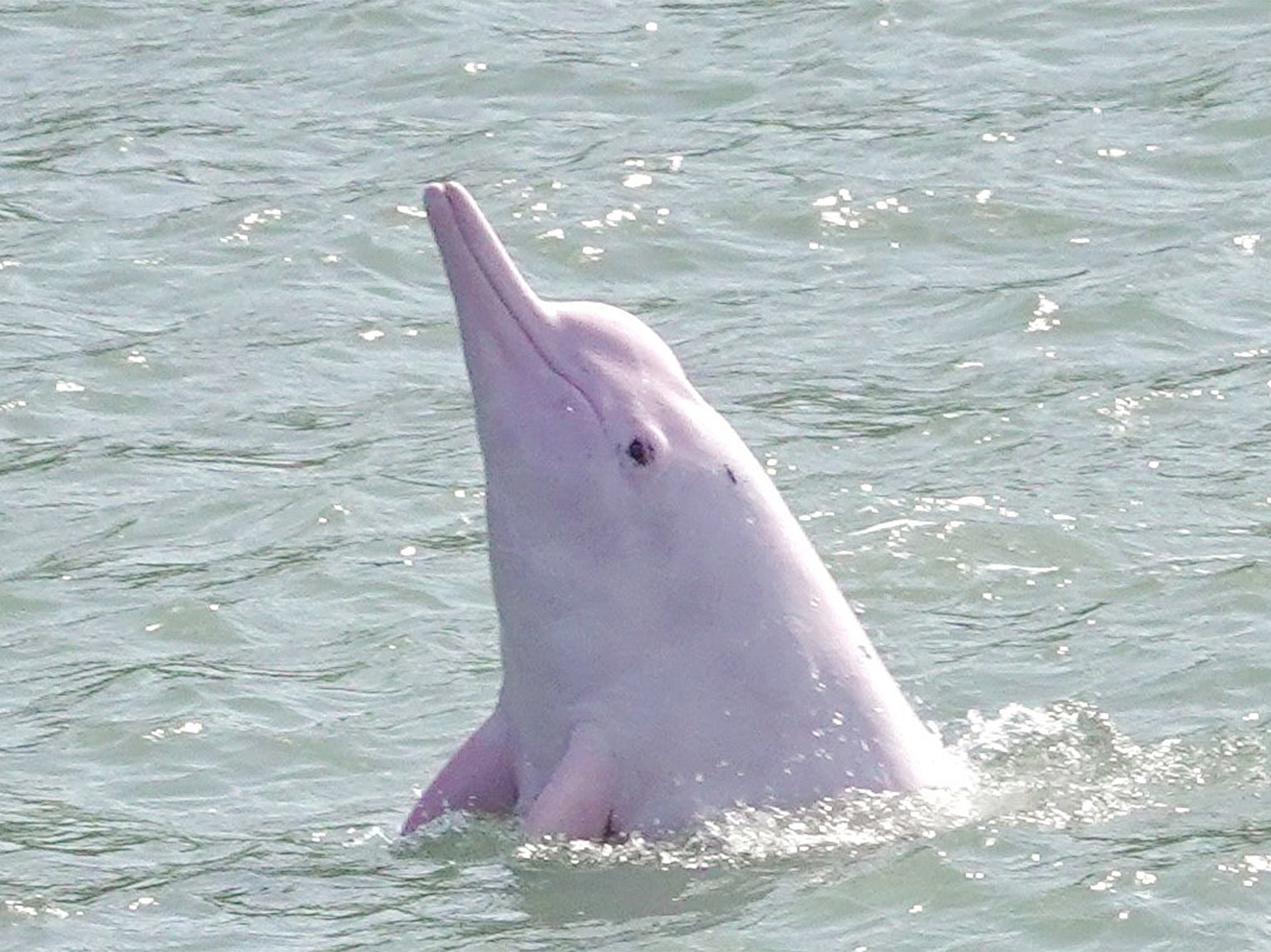
A research team from City University of Hong Kong (CityUHK), in collaboration with researchers from the Chinese Mainland, has discovered that liquid crystal monomers (LCMs) from household electronics and electronic waste can bioaccumulate in marine life, including the endangered Indo-Pacific humpback dolphins and finless porpoises. These compounds can penetrate the blood–brain barrier and accumulate in brain tissue, raising concerns about potential risks to the nervous system and other organs of these marine animals.
The study, titled “Liquid Crystal Monomers Released from LCD Displays Accumulate in Endangered Marine Cetaceans Triggering Health Concerns”, was published in the leading international journal Environmental Science & Technology.
The research was co-led by Professor Kenneth Leung Mei-yee, Director of the State Key Laboratory of Marine Environmental Health (SKLMEH), Chair Professor of Environmental Toxicology and Chemistry in the Department of Chemistry, and Associate Dean of the College of Science at CityUHK, Professor Henry He Yuhe, Associate Professor in the School of Energy and Environment and Assistant Director of the SKLMEH; and Professor Liang Bo, Assistant Professor in the Department of Biology at Shantou University. The team investigated how pollutants such as LCMs end up in top marine predators by analysing tissue samples collected from Indo-Pacific humpback dolphins and finless porpoises stranded in the northern South China Sea, an important habitat for these endangered marine animals, between 2007 and 2021.
LCMs are essential chemical components used in the manufacture of liquid crystal displays (LCDs) found in televisions, computers, smartphones and other electronic devices. Because these chemicals are designed to be highly stable for use in screens, they do not break down easily in the environment. The mass production and disposal of these devices can release LCMs into the environment through electronic waste.
This study provides the first direct evidence of the occurrence of LCMs in the brains of wild mammals, like dolphins and porpoises. A total of 62 target LCMs were investigated, 38 of which were detected in the samples. LCMs were found in multiple tissue samples, including blubber, and muscle, liver, kidney and brain tissue. Concentrations were the highest in blubber, followed by muscle and brain tissue, indicating substantial bioaccumulation in lipid-rich organs. The detection of these pollutants in the multiple organs (including the brain) highlights their potential health risks for dolphins and porpoises.
Most LCMs detected frequently were traced back to mixtures used in televisions and computer screens. The team also found that several LCMs impaired gene expression associated with DNA damage, oxidative stress and cell cycle regulation, indicating the possible disruption of fundamental cellular processes. Some compounds suppressed cell proliferation and interfered with DNA replication, which is consistent with reduced cell viability.
In addition to posing a threat to marine life, LCMs may bioaccumulate along the food web. They have been widely detected in air, indoor dust, sediments and marine organisms.
The team highlighted that coastal communities consume seafood species that overlap with the diet of dolphins and porpoises, so humans may also be exposed to LCMs through seafood consumption. This is a critical reminder that the pollution loop eventually closes with us. If these chemicals can cross the blood–brain barrier in dolphins, we must be concerned about the potential for similar effects in humans. However, the team emphasised that long-term health implications of such exposure require further investigation.
This article originated from CityUHK News Centre.