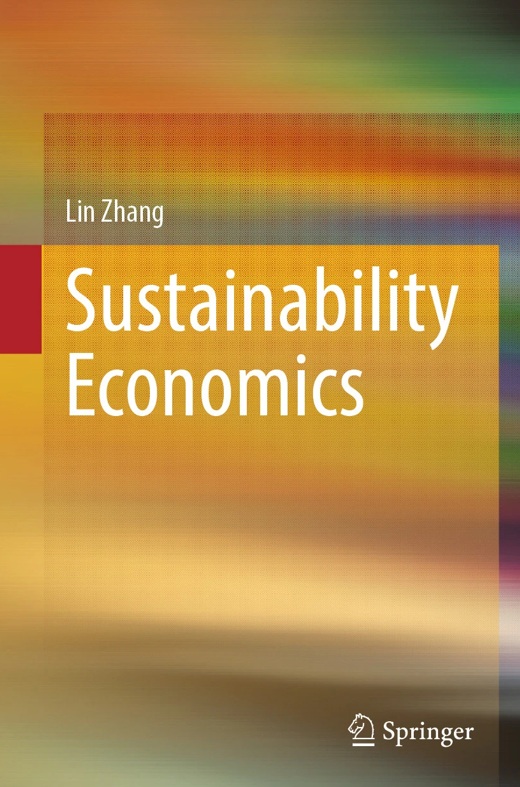
Professor Lin Zhang Publishes New Book: Sustainability Economics
Prof. Lin Zhang, Professor at the School of Energy and Environment (SEE), City University of Hong Kong (CityUHK), has officially released his new book, Sustainability Economics, published by Springer Nature. This book serves as a comprehensive guide to understanding and addressing the complex challenges of sustainable development through rigorous economic analysis.
In Sustainability Economics, Prof. Zhang offers an in-depth exploration of how economic principles can be applied to pressing sustainability issues. The book covers a wide spectrum of topics, including foundational economic theories, energy dynamics, environmental impacts, and social justice. It provides actionable insights into how businesses, policymakers, and communities can drive sustainable progress. With a focus on real-world applications, it explores the latest developments in energy efficiency, climate policy, and green finance, making it a critical resource for students, professionals, and anyone passionate about creating a more sustainable future.
Prof. Zhang’s research, focused on energy and sustainability economics, integrates economic theory, econometrics, general equilibrium modeling, machine learning and interdisciplinary assessments to develop effective policy solutions. His holistic and data-driven approach ensures that the book not only provides theoretical insights but also practical strategies for implementing sustainable practices across sectors. Recognized by Stanford University as one of the “Top 2% Scientists” worldwide, Prof. Zhang has mentored numerous Ph.D. students who have gone on to become influential leaders in academia and industry.
His new publication is expected to become a cornerstone reference for those seeking to advance sustainability through informed economic policy and practice. The book is now available through Springer Nature (https://doi.org/10.1007/978-3-031-87829-9 ) and is poised to make a significant impact in the field of sustainability economics.