Professor Kenneth Leung Co-authors Nature Cities Study Revealing Hidden Health Risks in Urban Wetlands
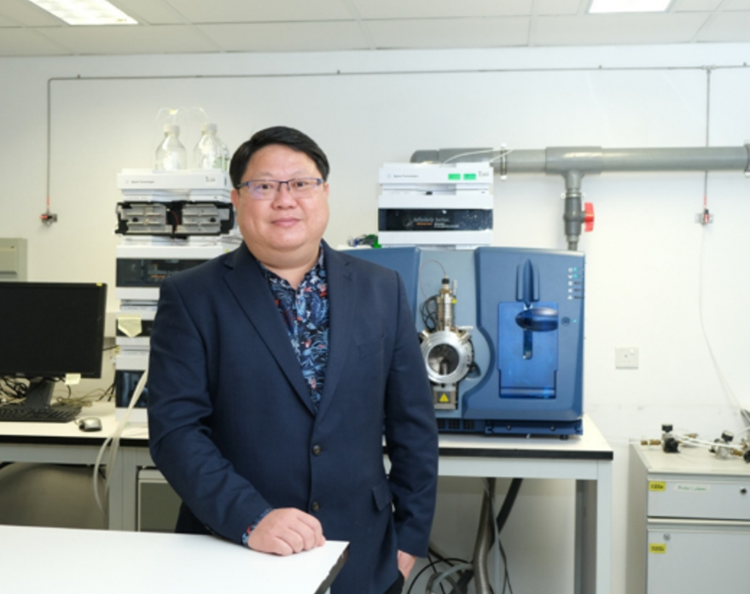
Photo Credit: Department of Chemistry, CityUHK
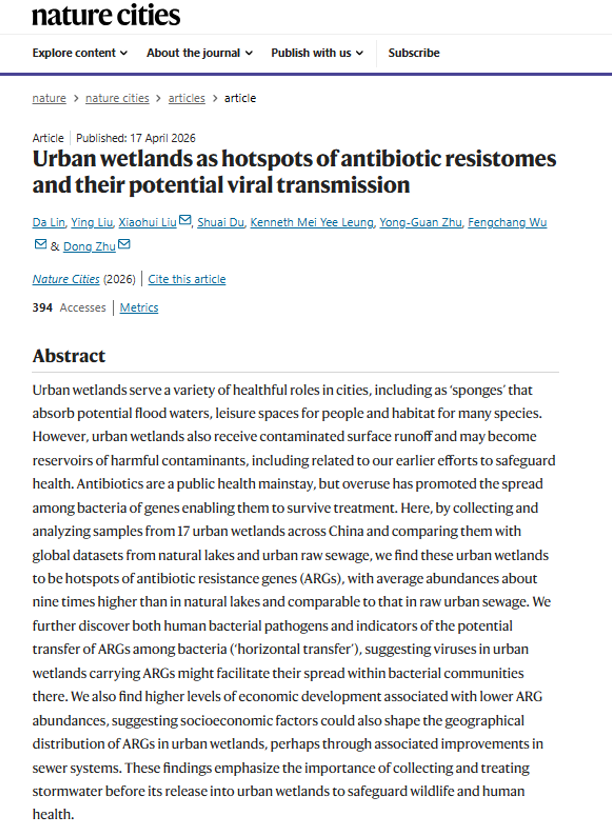
Prof. Kenneth Leung, B.B.S., JP, Affiliate Professor from the School of Energy and Environment (SEE) and Chair Professor of Environmental Toxicology and Chemistry at City University of Hong Kong (CityUHK), has co-authored a significant study titled “Urban wetlands as hotspots of antibiotic resistomes and their potential viral transmission,” recently published in the prestigious journal Nature Cities.
The study was conducted in collaboration with Prof. Yong-Guan Zhu from the Chinese Academy of Sciences and Prof. Fengchang Wu from the Chinese Research Academy of Environmental Sciences. It identifies a critical and previously under-recognised environmental health concern - the accumulation and transmission of antibiotic resistance genes (ARGs), collectively referred to as “antibiotic resistomes”, in urban wetlands.
The Dual Nature of Urban Wetlands
Urban wetlands play an important role in modern cities. They function as natural "sponges" that absorb floodwaters, provide recreational spaces for communities, and support biodiversity. However, the research reveals a less visible risk associated with these environments. Because urban wetlands often receive contaminated surface runoff, they may also become reservoirs of harmful biological pollutants, including antibiotic resistance genes (ARGs).
Key Findings from Global Comparisons
By analyzing samples from 17 urban wetlands across China and comparing them with global datasets from natural lakes and urban raw sewage, the research team made several important discoveries:
- High concentrations of ARGs: Urban wetlands were found to be hotspots for ARGs, with average abundances approximately 9 times higher than those in natural lakes and comparable to levels detected in raw urban sewage.
- Presence of human pathogens: The researchers identified human bacterial pathogens within urban wetland environments.
- Potential viral transmission pathways: Evidence suggests that ARGs may spread through horizontal gene transfer among bacteria, a process potentially facilitated by viruses present in urban wetland ecosystems.
- Influence of socioeconomic factors: Higher levels of economic development were found to be associated with lower ARG abundances, indicating that improved sewer infrastructure and wastewater management may influence the geographical distribution of ARGs.
Strategic Recommendations for Public Health
To better protect both wildlife and human health, the research findings emphasize the importance of collecting and treating stormwater before its release into urban wetlands. This intervention is a vital step in managing biological pollutants and ensuring the safety of these natural urban spaces.
This study reinforces CityUHK’s commitment to pioneering research at the intersection of urban development, environmental science, and public health, and to informing evidence-based policies for sustainable and resilient cities.
Read the full paper in Nature Cities: https://doi.org/10.1038/s44284-026-00433-z