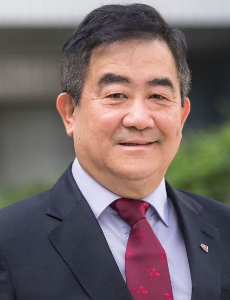
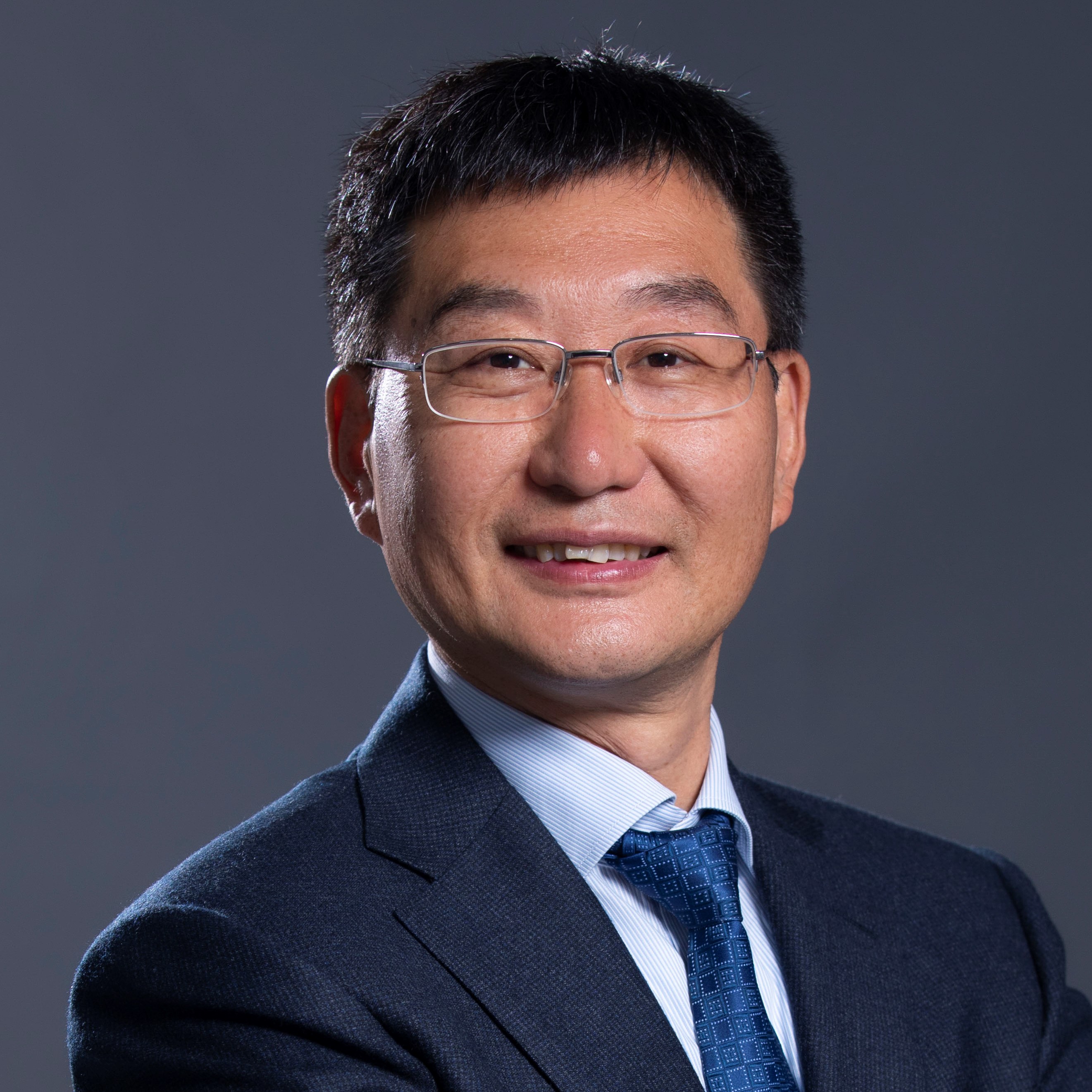
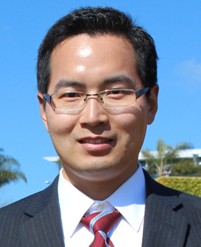
University of Tokyo, Japan
[KEYNOTE SPEAKER]
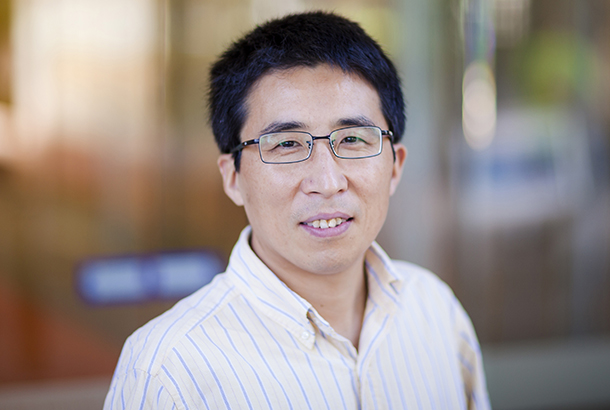
Kazuhiro Takanabe is Professor in the Department of Chemical System Engineering, School of Engineering, The University of Tokyo, and Principal Investigator of the Catalysis for Energy Conversion (CatEC) group. His academic career has developed through research appointments in Japan, the Netherlands, the United States, and Saudi Arabia. He received his Bachelor of Engineering in 2001 and Master of Engineering in 2003 from the Tokyo Institute of Technology and continued his doctoral research there under Professor Ken-ichi Aika. Between 2002 and 2004, while pursuing his graduate studies, he participated in an international exchange research program at the University of Twente in the Netherlands under Profs. Seshan and Leon Lefferts. He received his Doctor of Engineering from the Tokyo Institute of Technology in 2006.
From May 2006 to April 2008, he was a postdoctoral fellow at the University of California, Berkeley, working with Prof. Enrique Iglesia. From May 2008 to July 2010, he served as Assistant Professor at The University of Tokyo, where he worked with Prof. Kazunari Domen. In August 2010, he joined King Abdullah University of Science and Technology (KAUST), Saudi Arabia, as Assistant Professor. He was promoted to Associate Professor in July 2016 and to Professor in January 2018. In July 2018, he returned to The University of Tokyo as Professor and now leads the CatEC group, also known as the Takanabe-Obata-Kishimoto Laboratory.
At CatEC, his group investigates heterogeneous catalysts and catalytic systems for sustainable energy conversion, addressing the transition from conventional fossil resources toward renewable-energy systems. The research program integrates thermocatalysis, electrocatalysis, photocatalysis, and microwave-assisted catalysis rather than treating them as isolated disciplines. Current themes include water electrolysis and carbon dioxide reduction, carbon dioxide hydrogenation, ammonia synthesis and cracking, hydrogen-carrier chemistry, photocatalytic overall water splitting and photoelectrochemical redox transformations, and natural-gas conversion, including oxidative coupling of methane. The group also explores metal-cluster chemistry and nanomembrane coatings. Its materials span metal nanoparticles, oxides, nitrides, carbides, sulfides, molten salts, and emerging catalytic materials.
The group combines catalyst synthesis and structural characterization with reaction kinetics, operando measurements, microkinetic analysis, multiphysics simulation, and the rational design of reactors and electrochemical cells. A central objective is to establish quantitative links among working catalyst structures, molecular-scale reaction mechanisms, and macroscopic performance. The program also applies electrochemical approaches to the understanding of thermocatalysis and photocatalysis and advances fundamental science through international academic and industrial collaboration. His research has resulted in more than 250 publications.
He served as Associate Editor of the Journal of Catalysis from 2017 to 2019 and has been an Editor since 2020. Since 2025, he has served as Editor-in-Chief of the Hydrogen Energy Systems Society of Japan and as a board member of both the Hydrogen Energy Systems Society of Japan and the Catalysis Society of Japan. His honors include the Asian Rising Stars Lectureship in 2019, the Dean's Award for Research from the School of Engineering at The University of Tokyo in 2022, and The Chemical Society of Japan Award for Creative Work for 2024.
Title: From Buffer Transport to Reactant Switching: Electrolyte Engineering in Water Electrolysis
Abstract: Electrochemical conversion of small molecules is commonly discussed in terms of catalyst composition and active-site structure. In aqueous systems, however, the electrolyte is an active component of the reaction: it determines the available proton donors and acceptors, controls transport to and from the interface, establishes local pH, and alters the stability and selectivity of the electrode. Water electrolysis beyond strongly acidic or alkaline conditions provides a useful platform for revealing these coupled effects. Under non-extreme pH conditions, proton-coupled electron transfer cannot rely on abundant bulk H+ or OH- alone; instead, buffer species participate directly in sustaining interfacial charge transfer and in creating the reaction microenvironment.
In this lecture, I will present an electrolyte-engineering framework based on buffer-ion-mediated reaction microenvironments. Electrochemical measurements combined with numerical simulations quantify the transport of protonated and deprotonated buffer species and show how buffer concentration, diffusivity, and hydrodynamic conditions determine the attainable current density. At elevated current, buffer supply becomes diffusion-limited and substantial local pH shifts develop, even while the bulk pH remains nearly unchanged. The identity of the effective proton donor or acceptor can consequently change with potential and current density, giving rise to reactant switching. This behavior demonstrates why apparent catalytic activity cannot always be interpreted solely as an intrinsic property of the electrode material.
A second example concerns oxygen evolution in chloride-containing electrolytes. Phosphate species dynamically interact with nickel-based anodes and regulate the interfacial environment. Operando observations and electrochemical analysis indicate the formation of a transient protective state that suppresses chloride-induced corrosion and competing chlorine evolution, thereby favoring selective oxygen evolution. The protective action can also extend to other metallic components in the electrolysis cell. Dynamic potential (E)–pH analysis connects these electrolyte–surface interactions with the stability window of electrode materials under operating conditions.
These results establish electrolyte engineering as a design dimension complementary to catalyst and electrode engineering. Rational control of buffer identity and concentration, ion transport, local acid–base chemistry, and specific interfacial interactions can expand the usable pH window, enable earth-abundant materials, and improve selectivity and durability in complex electrolytes. More broadly, efficient electrochemical valorization of small molecules requires co-design of the catalyst, electrolyte, and dynamic reaction microenvironment rather than optimization of the solid catalyst in isolation.