


Published on Nature Cities (17 April 2026)
Author(s): Da Lin, Ying Liu, Xiaohui Liu , Shuai Du, Kenneth Mei Yee Leung, Yong-Guan Zhu, Fengchang Wu & Dong Zhu
Abstract
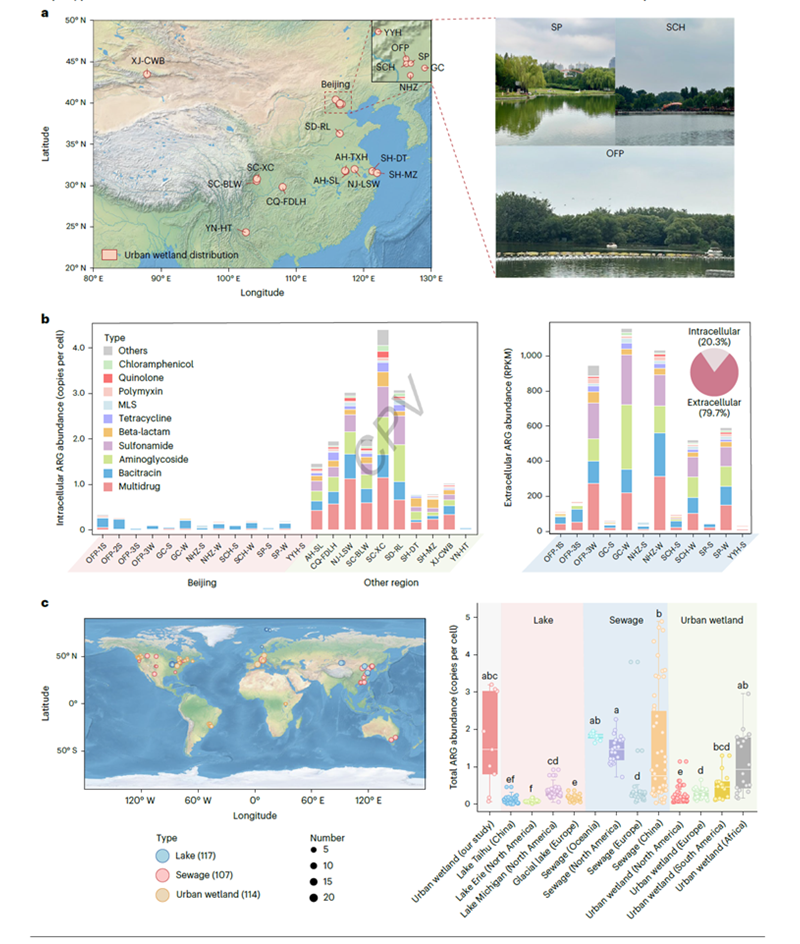
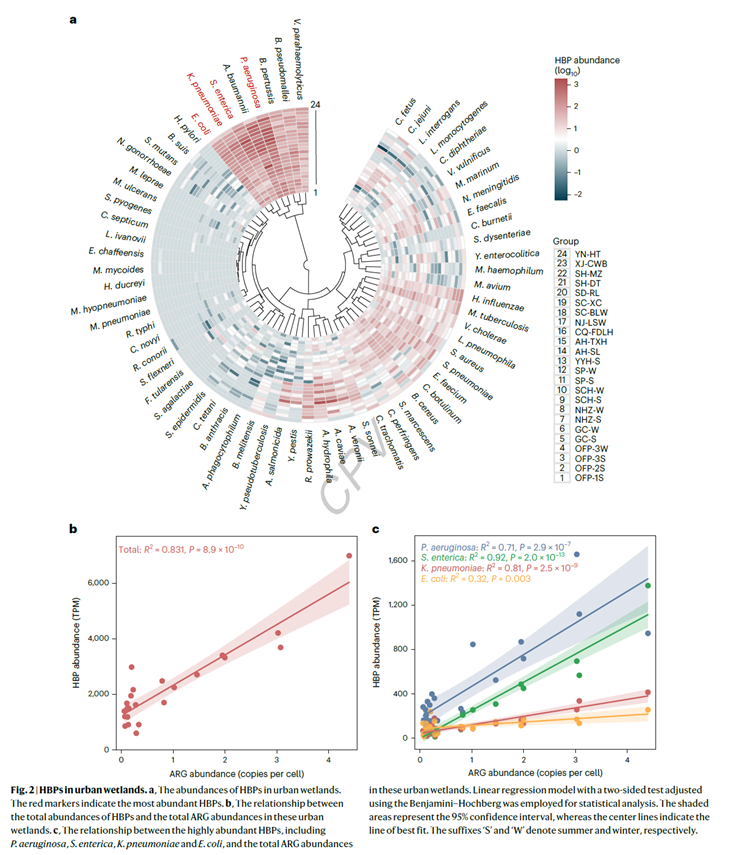
Urban wetlands serve a variety of healthful roles in cities, including as ‘sponges’ that absorb potential flood waters, leisure spaces for people and habitat for many species. However, urban wetlands also receive contaminated surface runoff and may become reservoirs of harmful contaminants, including related to our earlier efforts to safeguard health. Antibiotics are a public health mainstay, but overuse has promoted the spread among bacteria of genes enabling them to survive treatment. Here, by collecting and analyzing samples from 17 urban wetlands across China and comparing them with global datasets from natural lakes and urban raw sewage, we find these urban wetlands to be hotspots of antibiotic resistance genes (ARGs), with average abundances about nine times higher than in natural lakes and comparable to that in raw urban sewage. We further discover both human bacterial pathogens and indicators of the potential transfer of ARGs among bacteria (‘horizontal transfer’), suggesting viruses in urban wetlands carrying ARGs might facilitate their spread within bacterial communities there. We also find higher levels of economic development associated with lower ARG abundances, suggesting socioeconomic factors could also shape the geographical distribution of ARGs in urban wetlands, perhaps through associated improvements in sewer systems. These findings emphasize the importance of collecting and treating stormwater before its release into urban wetlands to safeguard wildlife and human health.
Read more: https://www.cityu.edu.hk/chem/update/Nature_Cities_26737894.pdf