

Summer Research Internship 2026
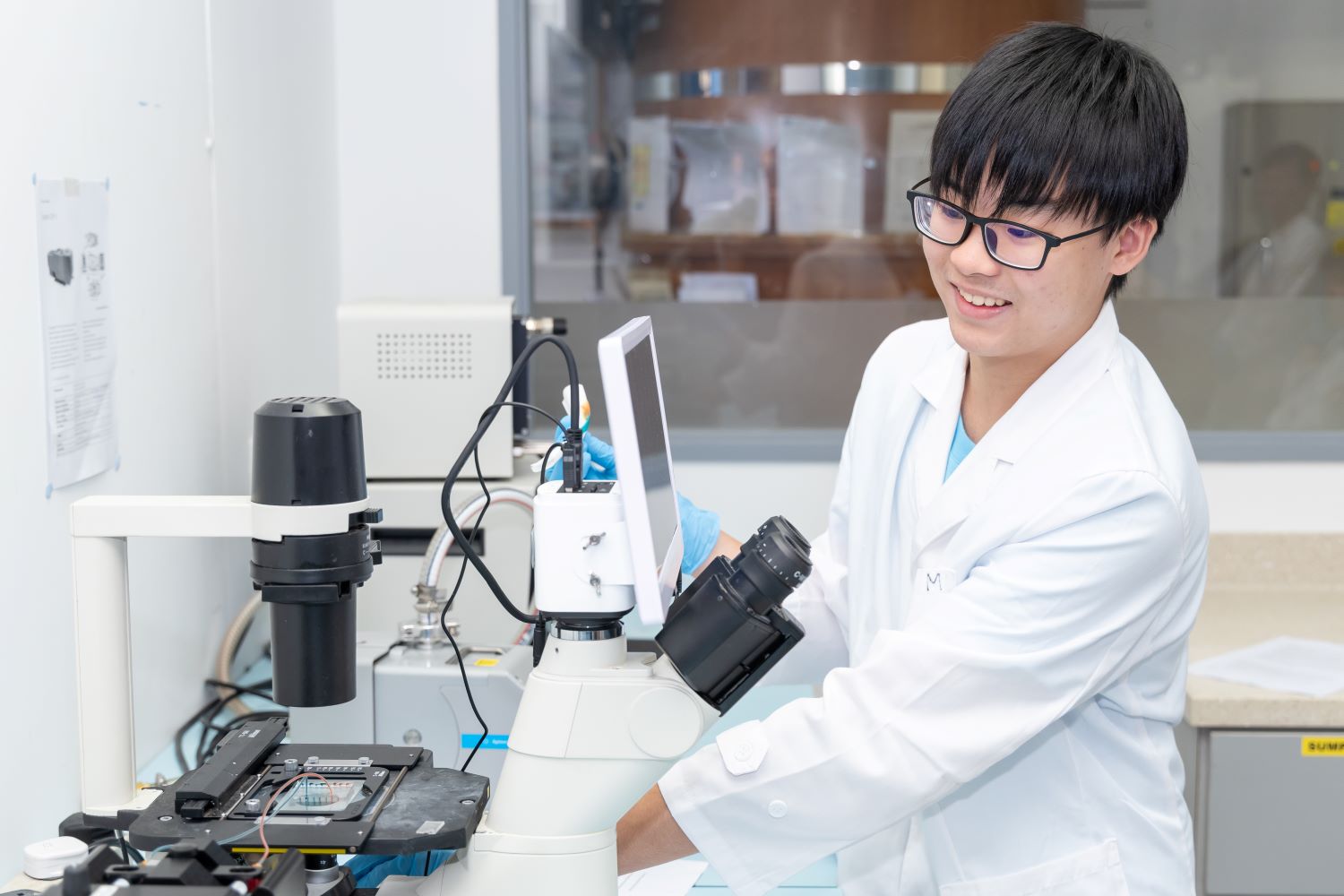
The 2-4 weeks long research internship provides an opportunity for secondary school students to undertake engineering-related research of their interest at CityUHK during the summer under the supervision of a faculty member and PhD students.
During the internship, students will:
- develop research skills and knowledge in a specific area of interest
- join a world-class research team and work alongside leading experts in the field
- establish professional networks for future studies and career
Eligibility:
- Secondary 4 - 6 students
- High proficiency in English with good academic standing
- Nominated by a referee who is REQUIRED to be a CURRENT teacher at the secondary school attended by the student
Key Dates:
| Application Period | 5 January 2026 (Monday) – 22 February 2026 (Sunday) |
| Interview Period | March 2026 |
| Announcement of Successful Applicants | by 30 March 2026 (Monday) |
| Summer Research Internship 2026 Orientation [including programme briefing] (Compulsory for Successful Applicants) |
30 May 2026 (Saturday) |
| Internship Duration | 2-4 weeks in 1 June - 5 August 2026 (Minimum of 64 contact hours in total on CityUHK campus) |
| Submission of Assignments | by 9 August 2026 (Sunday) |
| Award Presentation Ceremony | September 2026 (Tentative) |
Awards:
- Each intern will receive a Certificate of Achievement upon completing 64 contact hours on the CityUHK campus and submitting all required assignments.
- Interns with excellent performance will be selected for the Outstanding Summer Research Intern Award.
Application:
Students are required to complete the online application form and provide the contact details of their referees.
The referees will receive an email from the Hub requesting their recommendations.
Online Application: https://cityu.qualtrics.com/jfe/form/SV_dn8GHVMaLQUUBgi
We will acknowledge receipt of your applications by email.
Details:
The internship period is tentative and will be finalised later by the department and supervisor.
| Department | Code | Research Topic | Description | Internship Period |
|---|---|---|---|---|
| Architecture and Civil Engineering | ACE-1 | Urban wind field prediction to support low-attitude economy and nature-based solutions | Urban wind fields, shaped by the intricate interactions between building geometries, vegetation, and atmospheric dynamics, exhibit significant spatial and temporal variability. These dynamics present challenges for developing low-altitude economic activities, such as drone logistics and air mobility, as well as for implementing nature-based solutions like green walls and facades to improve urban resilience. This project focuses on accurately predicting urban wind fields using advanced computational modeling and machine learning techniques, incorporating urban morphology and environmental parameters. The objective is to provide actionable insights for optimizing low-altitude operations and enhancing the design and effectiveness of green infrastructure in mitigating urban environmental challenges. | 8 July – 5 August 2026 (3-4 weeks) |
| ACE-2 | Active Control of Fiber Orientation in 3D Concrete Printing | 3D concrete printing is an advanced additive manufacturing technique to create personalized structures. This project will use magnetic field to actively control fiber alignment in 3D printing concrete. This approach will minimize fiber clogging through the adjustment of steel fiber orientation in the flow direction, and meanwhile, improve the buildability and ductility of printed structures by uniformly aligning fibers in filaments. The outcomes will improve the overall quality of 3D printed concrete structures and facilitate the emergence of 4D concrete printing. *It requires 72 hours to complete the internship |
13 July - 31 July 2026 (3 weeks) | |
| ACE-3 | Development of Useful Concrete Products using Local Waste Materials through Carbon Capture Techniques | This project will provide basic knowledge about waste management in Hong Kong and train the students with some experiences to convert waste materials such as recycled concrete waste into valuable construction materials and make them into value-added products via carbon capture techniques, which will contribute to emission reduction, environmental protection and sustainable development in Hong Kong. | 13 July - 24 July 2026 (2 weeks) | |
| Biomedical Engineering | BME-1 | Digital Healthcare for Biomedical Analysis | The healthcare sector faces growing challenges in diagnosing and managing disease due to limited resources and rising demand. To address this, we propose an Imaging AI platform that applies advanced artificial intelligence to medical imaging. By integrating Vision Transformer architectures with cutting‑edge image analysis, the system will deliver dynamic, interactive training modules that teach students how AI can interpret X‑rays, MRIs, and CT scans. Through foundational courses, hands‑on workshops, and seminars, participants will gain practical skills in image classification, anomaly detection, and diagnostic verification, preparing them to contribute to next‑generation medical research and clinical practice. | 11 July - 25 July 2026 (2 weeks) |
| Computer Science | CS-1 | GUI Agent Safety | Agent is an emerging trend in 2025. One typical type of agent is the GUI agent, which leverages an LLM to do human-like GUI operations, e.g., clicking, scrolling, reading, and inputting in a website, an App, or even an OS. GUI agent is vulnerable to jailbreak/adversarial/backdoor/side-channel/agentic attacks. These attacks can be launched by manipulating different parts of the agent, including the user/system prompt, knowledge base, and tools. This project will aim to explore the safety of these emerging GUI agents. | 2 July - 31 July 2026 (4 weeks) |
| CS-2 | Can AI Detect AI? Evaluating the Accuracy and Bias of AI Detectors | As AI systems like ChatGPT, DeepSeek, and Gemini become part of everyday life, many schools, teachers, and editors are starting to use "AI detectors" to check whether something was written by a person or a machine. But how well do these tools actually work? Can they always tell the difference? This project will test how accurately online tools can spot AI-generated writing. It will involve collecting samples written by people (such as published articles) and generating similar samples using AI systems. These texts will then be checked using public AI-detection tools, and the results will be analyzed to find out: - How accurate are the detectors really? The project will also explore fairness and ethics: for example, whether AI detectors treat non-native English writing differently or if schools should rely on them for grading. In the end, the findings will offer ideas for making AI detection more accurate, fair, and responsible. |
2 July - 31 July 2026 (4 weeks) | |
| CS-3 | Vulnerability Detection of LLM-powered Human Activity Recognition Systems | The integration of Large Language Models (LLMs) with Human Activity Recognition (HAR) systems has enabled new capabilities such as generating virtual IMU data from text and performing zero-shot activity recognition. However, this integration introduces novel security vulnerabilities through prompt injection attacks, where malicious inputs can manipulate LLM outputs to generate tampered sensor data or corrupt activity interpretations. Unlike traditional HAR attacks that target sensor signals or text-only LLM vulnerabilities, these cross-modal attacks exploit the unique fusion of language and sensor modalities, creating unprecedented threats to safety-critical applications like medical monitoring. This project aims to detect the vulnerabilities of emerging LLMs and propose new methods to defend attacks. | 2 July - 31 July 2026 (4 weeks) | |
| Data Science | DS-1 | Identifying Key Determinants of Blood Glucose Levels Using Statistical and Machine Learning Models | This project aims to identify key factors that are associated with blood glucose levels through advanced data-driven approaches. Students will apply statistical analysis and machine learning algorithms such as regression models and decision trees to identify significant predictors and patterns within clinical and lifestyle datasets. The goal is to gain deeper insights into glucose regulation and to support early detection and management of metabolic disorders. | 6 July 2026 - 31 July 2026 (4 weeks) |
| DS-2 | Color Walk in the City and its Psychophysiological Effects | This project will provide student interns with hands-on experience in psychophysiological research. They will conduct a study examining how active observation of colors influences psychological and physiological states during urban walking. Under supervision, interns will learn to implement a comprehensive experimental protocol that compares a “color-walk” condition to a control condition. This project will provide student interns with hands-on experience in psychophysiological research. They will conduct a study examining how active observation of colors influences psychological and physiological states during urban walking. Under supervision, interns will learn to implement a comprehensive experimental protocol that compares a “color-walk” condition with a control group. During the experiment, they will operate wearable sensors to collect real-time physiological data, including heart rate variability (HRV) and skin conductance level (SCL). They will also administer questionnaires to assess self-reported mood and fatigue levels. This project will offer structured training in real-world experimental research, with a focus on the use of wearable technology, standardized data collection methods and data analytical skills. | 6 July 2026 - 31 July 2026 (4 weeks) | |
| DS-3 | Robustness of Deep Learning | Deep neural networks are powerful but vulnerable to adversarial attacks. Students will learn the basics of deep neural attacks, adversarial attacks, and adversarial defenses. | 6 July - 31 July 2026 (4 weeks) | |
| Electrical Engineering | EE-1 | CityUHK Architecture Lab for Arithmetic and Security (CALAS) Internship | Students will gain valuable learning experience in the CityUHK Arithmetic and Security Architecture Laboratory, such as gaining an understanding of the fundamentals of the arithmetic unit, conducting research activities in the area of security-aware systems, and considering the trade-offs between time-area, performance-security, and energy-cost. Specific security-aware hardware embodiments, such as microprocessors with security-related customised instructions, robust data path design, multi-core security, and secure embedded systems are among the topics. Students will also work in teams with other International students and summer interns. | 13 July - 24 July 2026 (2 weeks) |
| EE-2 | State Key Lab Research Summer Internship | Students will gain valuable learning experience at the State Key Laboratory of Terahertz and Millimeter Waves, City University of Hong Kong, to perform research activities in the area of antenna design, communication design, software and hardware designs. | 13 July - 24 July 2026 (2 weeks) | |
| Mechanical Engineering | MNE-1 | Modeling and evaluation of hydrogen fuel cells in polar environment | Due to their high energy density and low-carbon emission, hydrogen fuel cells have attracted significant attention across diverse energy supply applications such as automobiles and unmanned aerial vehicles (UAVs). In polar environments, utilization of fuel cells instead of batteries can more than triple the endurance of UAVs. During the energy-generating electrochemical reaction of fuel cells, up to 50% of the energy is converted into electricity through electron transfer, while the remainder is released as heat. In the extremely cold polar environments, however, this ‘wasted’ heat energy is considered a valuable resource, where hydrogen fuel cells can operate as a highly efficient combined heat and power (CHP) generation system. This project aims to model and evaluate the practical performance of hydrogen fuel cells under extreme working conditions of the polar environment. First, an electrochemical model is introduced to describe the output dynamics of the hydrogen fuel cells, accounting for critical parameters influenced by external temperature and humidity. Subsequently, leveraging experimental data collected, data-driven methods will be employed to estimate the environment-related parameters and construct a high-precision fuel cell model. Finally, based on the data-driven model, numerical and experimental investigation will be conducted to analyze the impacts of low temperature and low humidity on system performance, thereby providing a comprehensive evaluation of fuel cell energy supply in polar settings. |
13 July - 24 July 2026 (2 weeks) |
| MNE-2 | ROS2 Autonomy Quest: Learning to Navigate with an AI-Powered Ground Robot | Students will dive into the world of autonomous robotics by programming an Unmanned Ground Vehicle (UGV) to intelligently navigate and avoid obstacles. Using the industry-standard ROS 2 framework and a realistic 3D simulator, you will move beyond basic programming to train a simple AI model, enabling the robot to learn from its environment and make smart, "avoidance-aware" decisions to reach its goal. This hands-on project provides a foundational experience in robotics, path-planning, and machine learning, culminating in a final navigation challenge. | 13 July - 24 July 2026 (2 weeks) | |
| MNE-3 | Hydrogen embrittlement: the weak link behind the “perfect” green hydrogen future | Hydrogen is widely promoted as a clean and sustainable energy carrier, yet its interaction with metals creates an unexpected challenge: hydrogen embrittlement. Hydrogen atoms can diffuse into metals, weaken their structure, and cause sudden cracking — a serious concern for hydrogen pipelines, storage tanks, and fuel-cell systems. In this project, students will perform simple demonstrations such as electrochemical hydrogen charging and will use beginner-friendly AI tools to analyse microstructures, detect hidden cracks, and understand how hydrogen affects materials at the microscopic level. This activity reveals how materials science and AI come together to support the future of green hydrogen technologies. | 13 July - 24 July 2026 (2 weeks) | |
| MNE-4 | Bioinspired Growing Robot: Steering a Robot by Controlled Growth | How can a robot move forward without wheels, legs, or motors? In this project, students will explore a new type of robot that moves by growing in a desired direction, much like a plant vine extending toward sunlight. Students will learn how engineering, physics, and biology-inspired ideas can be combined to create robots that navigate narrow spaces and adapt to their surroundings. Through simple design, prototyping, and testing, participants will investigate how to control the direction of growth and understand the potential of growing robots in real-world applications. | 13 July - 24 July 2026 (2 weeks) | |
| Materials Science and Engineering | MSE-1 | Exploring the Future of Solar Energy: Fabrication of Emerging Perovskite Solar Cells | Students will participate in the R&D project related to future materials for high performance solar energy conversion as an intriguing alternative to conventional silicon-based photovoltaics. New materials to be explored include metal halide perovskites with tunable optical and electronic properties. Fabrication and characterization of thin-film perovskite solar cells may be one of the focuses, allowing students to experience the fundamentals of clean energy technology and materials engineering through guided laboratory practice. | 13 July - 24 July 2026 (2 weeks) |
| MSE-2 | Establishment of Machine Learning Classification/Prediction Models Based on Data Mining of Electrochemical CO₂ Reduction | Students will participate in the R&D project related to high-throughput screening of electrocatalytic CO₂ catalysts. This work involves data mining, data cleaning, and model building processes, primarily allowing students to experience the application of computational algorithms such as random forests and decision trees in the field of materials science. | 12 July - 3 August 2026 (3 weeks) | |
| Systems Engineering | SYE-1 | Smart Transport and Logistics | The emerging Internet of Things (IoT) technologies have facilitated the development of urban logistics via crowdsourcing. Such crowd logistics is an emerging model which uses a voluntary crowd and digital platforms for urban goods delivery. This project aims to develop and analyze prototypes of intelligent crowd logistics systems that can reduce transportation costs and improve delivery efficiency with the use of AI. | 13 July - 24 July 2026 (2 weeks) |
| SYE-2 | AI case survey/preparation for TBL | In 2025, while AI's transformative potential reshapes content creation, the landscape is marred by rampant misinformation—including deepfakes, fake news, and hyper-personalized propaganda—fueled by low-cost generative tools and algorithmic vulnerabilities, prompting global regulatory responses. Therefore, we are going to survey or prepare (with the help of LLMs) AI cases for TBL of 1) real/fake cases, 2) useful or purely propaganda cases, 3) cases that could be easily optimized with basic AI knowledge, 4) real/fake challenges for the AI industries, 5) useful measures for countermeasures. This endeavor promises to be highly interesting and engaging, offering exposure to a wealth of real-world AI application cases that foster insights into the industry’s future trajectory and empower you to refine your personal career roadmap. | 6 July - 24 July 2026 (3 weeks) | |
| SYE-3 | Trustworthy AI-driven Analysis of Port City Air Quality and Vessel Traffic | The rapid growth of global maritime trade has intensified vessel traffic in major port cities worldwide. Ship emissions, containing sulfur oxides, nitrogen oxides, and particulate matter, have become a significant source of air pollution in coastal urban areas, affecting millions of residents' health and quality of life. This project aims to develop a trustworthy AI framework that investigates and quantifies the correlation between vessel traffic patterns and air quality indicators through transparent and reliable data analysis. By integrating real-time AIS (Automatic Identification System) vessel tracking data with air quality monitoring station records, the research will employ conformal prediction methods to provide rigorous uncertainty quantification for pollution forecasts, ensuring that stakeholders receive not only point predictions but also reliable confidence intervals for decision-making. The trustworthy AI approach emphasizes model interpretability, allowing port authorities and environmental regulators to understand the causal relationships between shipping activities and air quality degradation. This research will develop explainable statistical models that maintain prediction accuracy while providing transparent reasoning, identify peak pollution periods with quantified certainty levels, and propose data-driven recommendations with associated confidence bounds for sustainable port management and emission reduction strategies. | 13 July - 31 July 2026 (3 weeks) | |
| SYE-4 | 3D Urban Environment Simulation | Smart mobility management in urban transportation relies on real-time situational awareness and predictive analytics provided by traffic digital twins that mirror the actual traffic evolution in the digital space. This project aims to develop a prototype of Hong Kong road networks using satellite images and street map data. Such a prototype will lead to high-fidelity traffic simulation for urban mobility management.
*It requires 96 hours to complete the internship |
13 July - 31 July 2026 (3 weeks) | |
| SYE-5 | Coexisting with cyber risks via cyber insurance design | Cybersecurity is an emerging safety issue in modern complex systems. Most existing security measures focus on system protection, leaving post-damage risk management unexplored. This project aims to investigate the role of cyber insurance in cyber risk management to enable risk sharing and coexist with risks. | 13 July - 24 July 2026 (2 weeks) | |
| SYE-6 | Building Structural Digital Twin of Critical Urban Assets | This project aims to develop a digital twin for a critical urban asset. A digital twin model of a steel truss bridge will be established to reproduce its dynamic response under impact loading, which will serve as simulated monitoring signals. By introducing structural damage at different locations of the bridge, the digital twin model will generate virtual monitoring signals corresponding to various damage scenarios. These signals will then be employed to construct a damage diagnosis model capable of identifying and localizing the damaged components of the bridge. Finally, the diagnostic framework will be transferred to real-world applications, enabling effective damage detection in the physical bridge. | 13 July - 24 July 2026 (2 weeks) | |
| SYE-7 | Development of new methods for 3D display and 3D industrial inspection | Students will join our research team to design and develop new methods for 3D display, holograms, and 3D imaging applications that can be used in a smart city | 13 July - 24 July 2026 (2 weeks) | |
| SYE-8 | GPU accelerated optimization | Students will explore how to use a decomposition algorithm to decompose an optimization problem and use GPU to accelerate the solution processes. We apply the proposed computational framework to large-scale supply chains and model predictive control. | 13 July - 24 July 2026 (2 weeks) | |
| SYE-9 | On the Polyhedral Structure of Capacitated Temporal Network Problems with Integrality Constraints | This project studies the mathematical structure of network optimization problems that evolve over time and require integer decisions—such as shipping whole units of goods through capacity-limited routes. The focus is on understanding the geometry of the feasible region and how integrality constraints shape it. The work involves formulating small-scale instances, identifying valid inequalities, and examining conditions under which the linear relaxation yields integer solutions (or fails to). No prior knowledge of polyhedral theory is assumed, but familiarity with linear algebra and basic optimization concepts is helpful. | 13 July - 24 July 2026 (2 weeks) |