|
Arms and armour in Japan are deeply intertwined with the
country's martial history and traditions. They are intrinsically linked to the
bushi, Japan's warrior class (popularly known as the samurai in the West), who
dominated the country's social, political, and military landscape for centuries,
beginning with the Kamakura shogunate (created in 1192). These warriors followed a
code of idealised behaviour known as bushido (way of the warrior), which focussed on
seven virtues: honesty, courage, respect, benevolence, integrity, honour, and
loyalty. While they initially rose to power due to their military prowess, they
maintained their elevated positions through political, financial, and cultural
acumen, and were expected to hold administrative positions within their military
government. In addition, and in contrast to the brutality of their profession, they
also became highly cultivated individuals, practicing, supporting, and patronising
the arts.
In feudal Japan, ownership of high-quality arms and armour was a mark of social
status and esteem. Wealthy samurai lords, known as daimyo, commissioned master
artisans to produce exquisite suits of armour and weapons. During the peaceful Edo
period (1615–1868) as well as the Meji period (1868–1912), these objects transformed
from instruments of war to coveted symbols of wealth, power, and lineage. For
example, ceremonial arms and armour were passed down through generations, treated as
reverential objects towards one's family history and heritage. They also were
crucial to a samurai's public image; they would display these objects in their homes
as well as during important events, such as tea ceremonies, as markers of status and
prestige. As a product of the ritual nature of Japan’s sword culture, many swords
were dedicated by bushi houses to shrines and temples as objects of worship.
Around the administrative bases of powerful daimyo, major sword-making centres
emerged, leading to the development of the five great sword-making traditions:
Yamashiro, Yamato, Bizen, Soshu, and Mino. Sword aesthetics were not static but
rather evolved over time, reflecting changing tastes and advances in manufacturing
techniques, with the major schools influencing one another. The art of sword
appreciation became a highly specialised field, especially during the Edo period.
The distinct features and craftsmanship of various schools and masters were
meticulously recorded and studied, giving rise to the discipline of sword appraisal
known as kantei. This body of knowledge continues to inform the appreciation of
nihonto (Japanese swords) today.
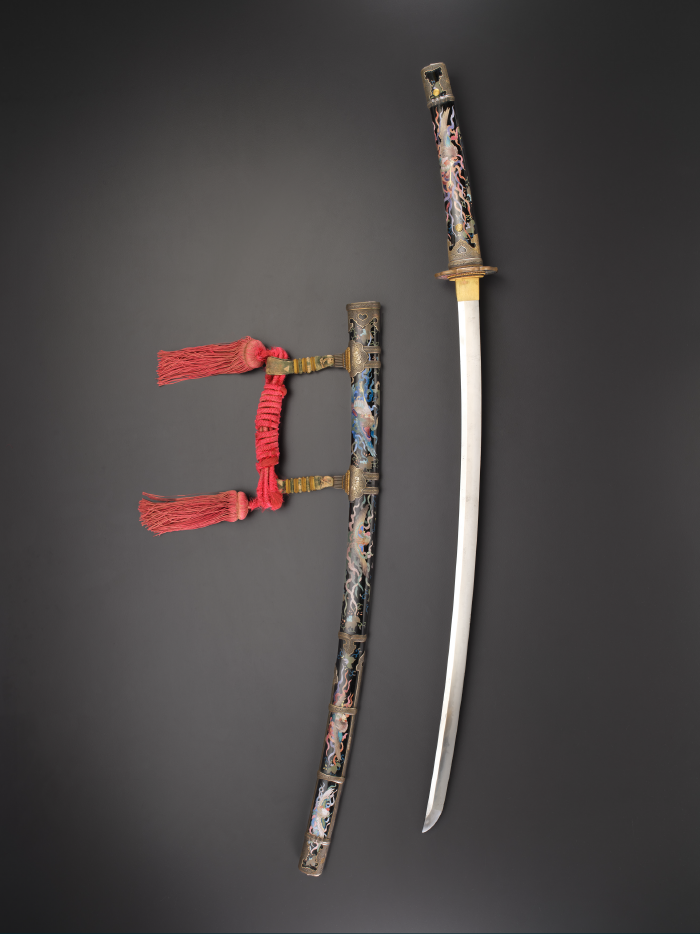
Japanese ceremonial arms and armour are celebrated for their exquisite craftsmanship
and artistic beauty. To adorn them, artisans employed traditional techniques such as
lacquering, metalworking, and intricate detailing. Decorations were a reflection of
both the cultural identity and aesthetic sensibilities of their patrons, and
included family crests; clan symbols; auspicious motifs, including dragons,
phoenixes, and cherry blossoms; as well as themes of nature, mythology, and
religious symbolism. During the Meji period, the abolishment of the samurai class
and openness to the West led to the production of more flamboyant ceremonial arms to
suit the tastes of the European market. Nonetheless, the production and
embellishment of these works were a true pursuit of excellence; artisans
collaborated to meticulously execute the parts in which they
specialised.
|