

Caring for Abandoned Animals, Becoming a Compassionate Veterinarian
Ruby Tsang
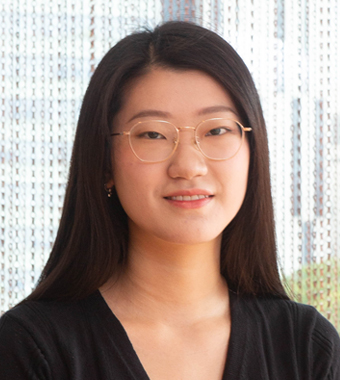
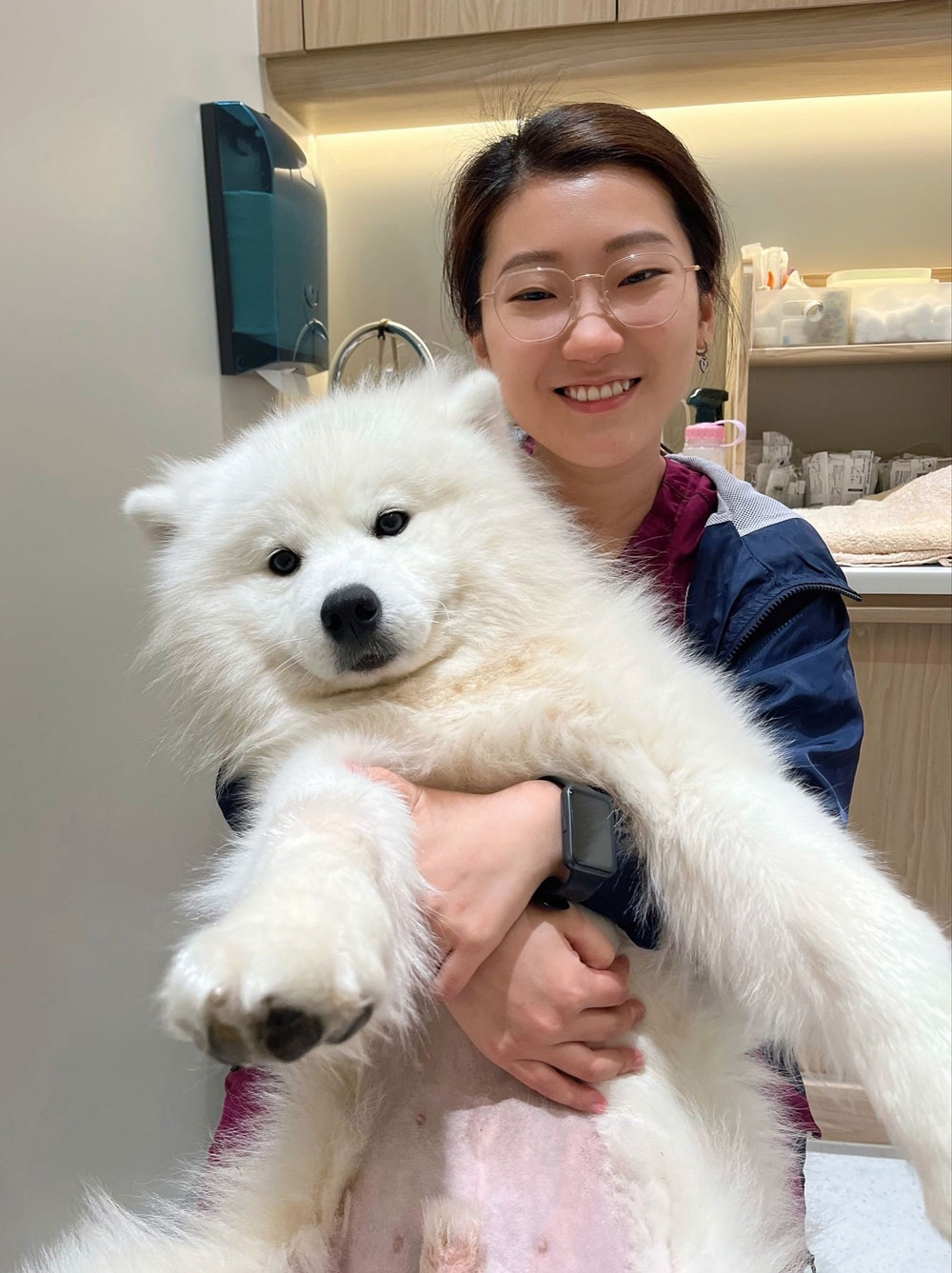
Ruby Tsang encourages the public to care for animals and practice "adopt, don't shop" to help stray animals find homes.
- Bachelor of Veterinary Medicine, CityUHK
- Junior Veterinarian at the Veterinary Clinic, Society for Abandoned Animals (SAA)
"What do you want to be when you grow up?" For Ruby Tsang, now a veterinarian at the Society for Abandoned Animals (SAA), the answer has always been the same: a career caring for animals. When she learned that City University of Hong Kong (CityUHK) offered the only veterinary medicine program in Hong Kong, she immediately made it her first choice for further studies. With unwavering passion and dedication, she completed a fulfilling six-year academic journey, realizing her childhood dream of combining her love for animals with professional development.
Ruby Tsang, who has always found cats and dogs incredibly adorable, recalls that her dream job as a child was to spend every day with animals. "Initially, I wanted to be a zookeeper, accompanying various animals as they grew healthily. When I entered secondary school, I developed a strong interest in science and discovered that besides human medicine, there was also the veterinary profession dedicated to treating animals. That became my career path."
When asked why she chose to study at CityUHK, Ruby Tsang's answer was clear and firm: "Because I plan to practice in Hong Kong." She believes that receiving veterinary education locally allows for a better understanding of the needs and common issues faced by pet owners in Hong Kong, laying a solid foundation for her future work. "After all, the animal healthcare environment varies from place to place. For me, studying at CityUHK has been immensely helpful for working as a veterinarian in Hong Kong."
Reflecting on the six-year program, she mentioned that CityUHK provides students with numerous opportunities for internships, overseas exchanges, and field studies. These experiences presented many challenges but also propelled her growth. "The most memorable experience was during my first year when CityUHK arranged for me to participate in an exchange program at Cornell University in the United States. The university specifically assigned senior veterinary students to mentor and guide us, allowing me to truly experience an international academic atmosphere."
"In the final year of the program, I went to Australia for an internship at a veterinary school. Although the schedule was intensive, each day had a clear learning plan, and I gained invaluable insights from basic diagnostics to practical procedures." Ruby Tsang added that while veterinary education in Hong Kong is becoming increasingly comprehensive, other countries and regions still offer unique experiences for local students. For instance, during her internship on a farm in Australia, she gained in-depth knowledge of the operations of animal production facilities and even assisted with processes such as breeding, birthing, and rearing—an incredibly valuable experience.
When asked about the most significant takeaway from her studies, Ruby Tsang, now a practicing veterinarian, did not hesitate to say, "Learning how to communicate with clients." She further explained that CityUHK's mentors often remind students that even with excellent medical skills, it is difficult to truly help animals if one does not know how to communicate with their owners.
"Once, an owner brought in an older dog that needed surgery after diagnosis, but the dog's physical condition was not ideal. I had to explain the risks of surgery and anesthesia, as well as the expected outcomes to the owner. Sometimes, owners who deeply love their pets may not be able to accept the facts immediately or make decisions. We must give them more time to process the information or use gentler ways to communicate." Drawing from her own experience, she emphasized that good communication requires a balance of honesty and skill. Being too direct may come across as cold, while being too indirect may prevent owners from understanding the severity of their animal's condition.
As for her connection with SAA, Ruby Tsang revealed that she first encountered the organization during a university-arranged site visit in her first year and was deeply impressed. "That was the first time I truly understood the plight of stray animals and began to pay attention to the issue of animal abandonment. It was a meaningful and inspiring experience for me. Coincidentally, after graduation, SAA was hiring veterinarians. During the interview, a senior veterinarian enthusiastically introduced the work environment and team at the animal clinic, which further increased my fondness for the place. I was convinced that it would provide an excellent platform for growth."
"Once, a stray kitten was in critical condition, hanging by a thread. After treatment and careful nursing by the staff, it recovered fully. This brought me the greatest sense of fulfillment." She openly admitted that her veterinary career has had both exhilarating moments of successfully saving lives and inevitable feelings of helplessness. For example, while assisting with SAA's "TNR" (Trap, Neuter, Return) program to control the stray animal population, she encountered situations where the animal was already pregnant. Understanding that the goal of TNR is to effectively manage the stray animal population, she had to proceed with the surgery, humanely ending the lives of the unborn kittens.
It is precisely because of such heart-wrenching experiences that Ruby Tsang hopes to start with education, promoting public care for animals and spreading the message of "adopt, don't shop" to help stray animals find homes. "Being a veterinarian isn't just about spending time with adorable animals; it often involves facing the realities of life, aging, sickness, and death. For younger students aspiring to pursue this career path, I encourage them to volunteer with animals, personally interact with and care for stray cats and dogs, and use these experiences to thoughtfully consider their future path."
(Published at 13 November 2025)