
Speakers & Abstracts

Abstract
In this lecture, the speaker reviews recent results on subwavelength resonances. His main focus is on developing a mathematical and computational framework for their analysis. By characterizing and exploiting subwavelength resonances in a variety of situations, he proposes a mathematical explanation for super-focusing of waves, double-negative metamaterials, Dirac singularities in honeycomb subwavelength structures, and topologically protected defect modes at the subwavelength scale. He also describes a new resonance approach for modelling the cochlea which predicts the existence of a travelling wave in the acoustic pressure in the cochlea fluid and offers a basis for the tonotopic map.

Abstract
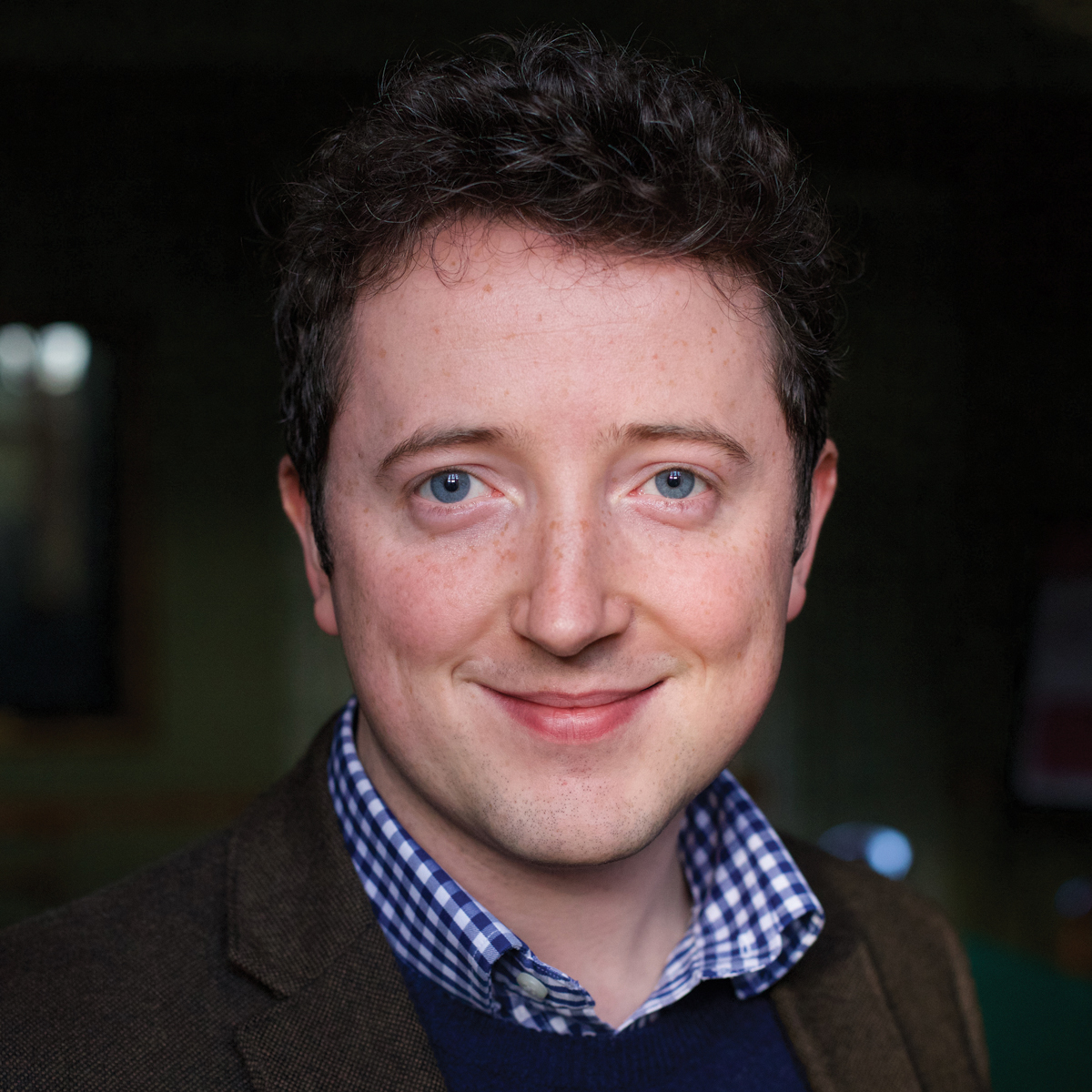
Abstract
Computing the distinct solutions $u$ of an equation $f(u, \lambda) = 0$ as a parameter $\lambda \in \mathbb{R}$ is varied is a central task in applied mathematics and engineering. The solutions are captured in a bifurcation diagram, plotting (some functional of) $u$ as a function of $\lambda$. In this talk I will present a new algorithm, deflated continuation, for this task.
Deflated continuation has three advantages. First, it is capable of computing disconnected bifurcation diagrams; previous algorithms only aimed to compute that part of the bifurcation diagram continuously connected to the initial data.
Second, its implementation is extremely simple: it only requires a minor modification to an existing Newton-based solver. Third, it can scale to very large discretisations if a good preconditioner is available.
Among other problems, we will apply this to a famous singularly perturbed ODE, Carrier's problem. The computations reveal a striking and beautiful bifurcation diagram, with an infinite sequence of alternating pitchfork and fold bifurcations as the singular perturbation parameter tends to zero. The analysis yields a novel and complete taxonomy of the solutions to the problem. We will also apply it to discover previously unknown solutions to equations arising in liquid crystals and quantum mechanics.
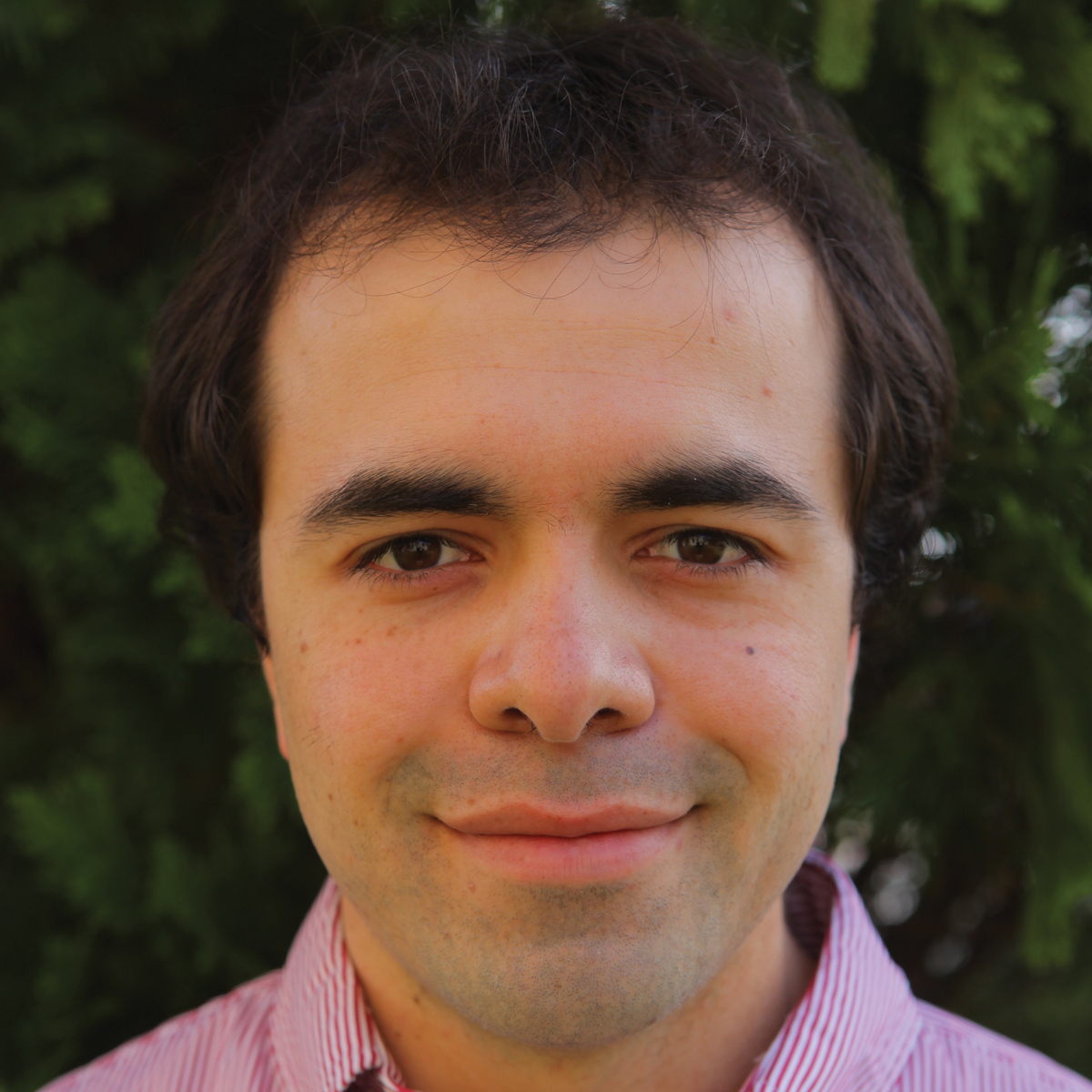
Abstract
In 2003 Conti & De Lellis showed that incompressibility and a.e. injectivity are not enough to prevent the formation of (cavitation-like) singularities and the reversal of orientation in the passage to an H¹-weak limit in 3D (as opposed to the situation in W^{1,p} for any p>2). However, the dipoles formed in their counterexample should not have any chance of minimizing the neoHookean energy. It will be explained that, in the simplified axisymmetric class, the only singularities that can originate (in the weak closure) from regular maps (without cavitation) have exactly that dipole structure; that the inverses of maps in the weak closure have BV regularity; and that the Dirichlet energy hides the dissipation due to the underlying bubbling of infinitesimal disks, dissipation that can in turn be characterized in terms of the derivative of the inverse and is recovered upon relaxation. The problem of existence of minimizers for the neoHookean energy can, hence, be rewritten in terms of a more explicit variational problem where the non-minimality of dipoles should conceivably be easier to establish. (Joint with M. Barchiesi, C. Mora-Corral & R. Rodiac.)
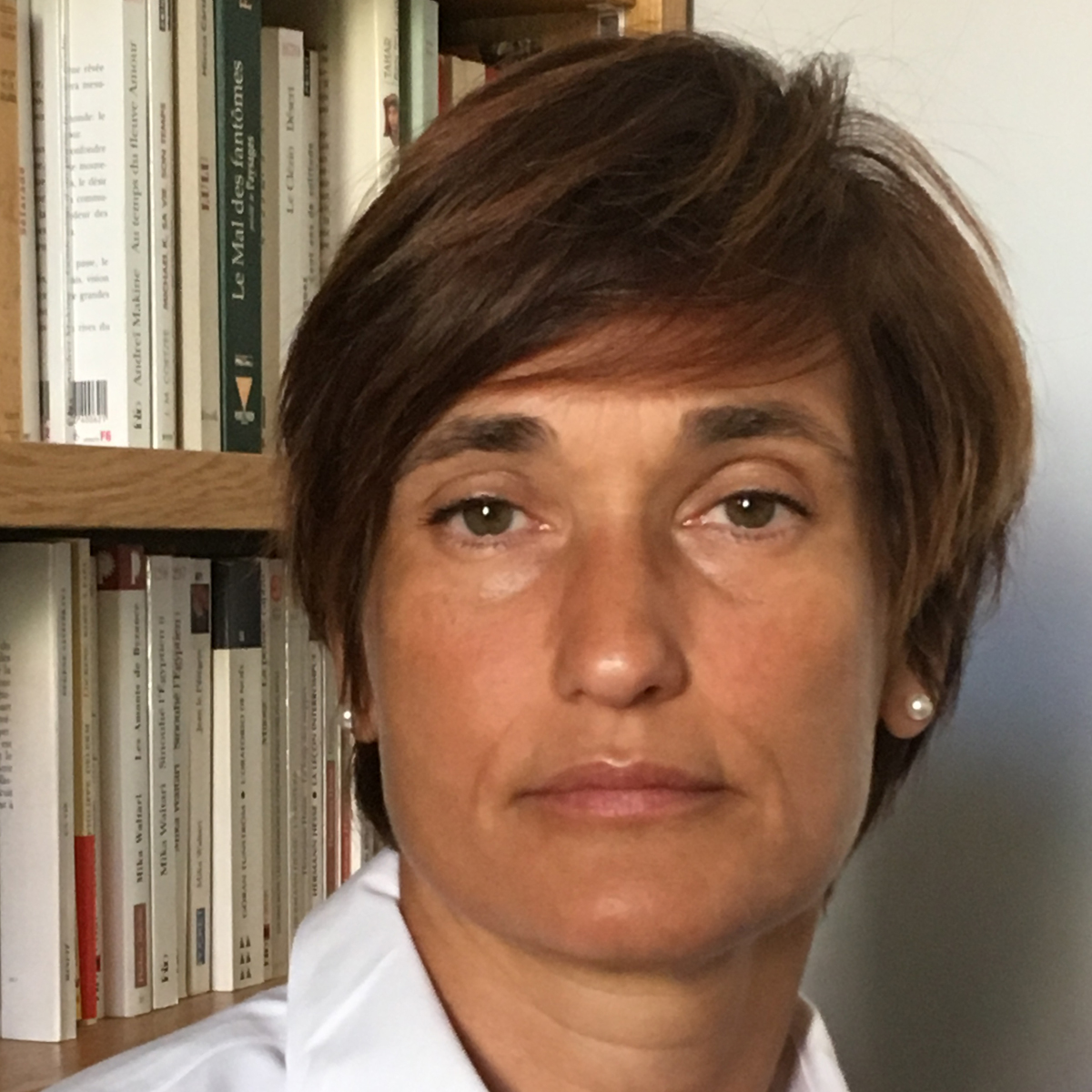
Abstract
Understanding the soil organic matter cycle is a major tool in the effort to reduce global warming, to preserve biodiversity and to improve food safety strategies. In this talk we first validate a nonlinear soil organic carbon model MOMOS (Mod- elling Organic changes by Micro-Organisms of Soil) and we prove that if the data is periodic then there exists a unique attractive periodic solution. Second we focus on the mathematical validation of a spatial model derived from MOMOS by adding diffusion and transport operators. We prove also the existence of a periodic solution. Finally we consider a third model that takes into account the chemotaxis motion of soil microorganisms. We prove mainly existence and uniqueness of a positive solution in a regular spatial domain of dimension less or equal to 3.
Keywords. Soil organic matter - Advection-reaction-diffusion - Chemotaxis - MO- MOS model - Periodic solution
References
- A. Hammoudi, O. Iosifescu and M. Bernoux, "Mathematical analysis of a nonlinear model of soil carbon dynamics," Differ. Equ. Dyn. Syst., 23, (2015), 453-466.
- A. Hammoudi, O. Iosifescu and M. Bernoux, "Mathematical analysis of a spatially distributed soil carbon dynamics model," Analysis and Applications, 15, (2017), 771-793.
- A. Hammoudi, O. Iosifescu, "Mathematical Analysis of a Chemotaxis-Type Model of Soil Carbon Dynamic", Chin. Ann.Math.Ser. B 39 (2018), 253-280.

Abstract
We characterize the macroscopic effective behavior of hexagonal lattices with non polynomial growth, two-body interactions as well as angular interactions. The results apply to the mechanical behavior of atomic sheets, such as graphenes, with Lennard-Jones repulsive two-atomic energy and angular energy. This is joint work with A. Raoult.

Abstract
In elastostatics, the problem of finding the deformation of a nonlinearly elastic body subjected to external forces reduces to solving either a non-convex minimisation problem, or a boundary value problem associated with a fully nonlinear elliptic system of partial differential equations. I will give an overview of the existence theory for this problem in three-dimensional elasticity, then I will discuss recent existence results for the corresponding problem in two-dimensional nonlinear shell theory.
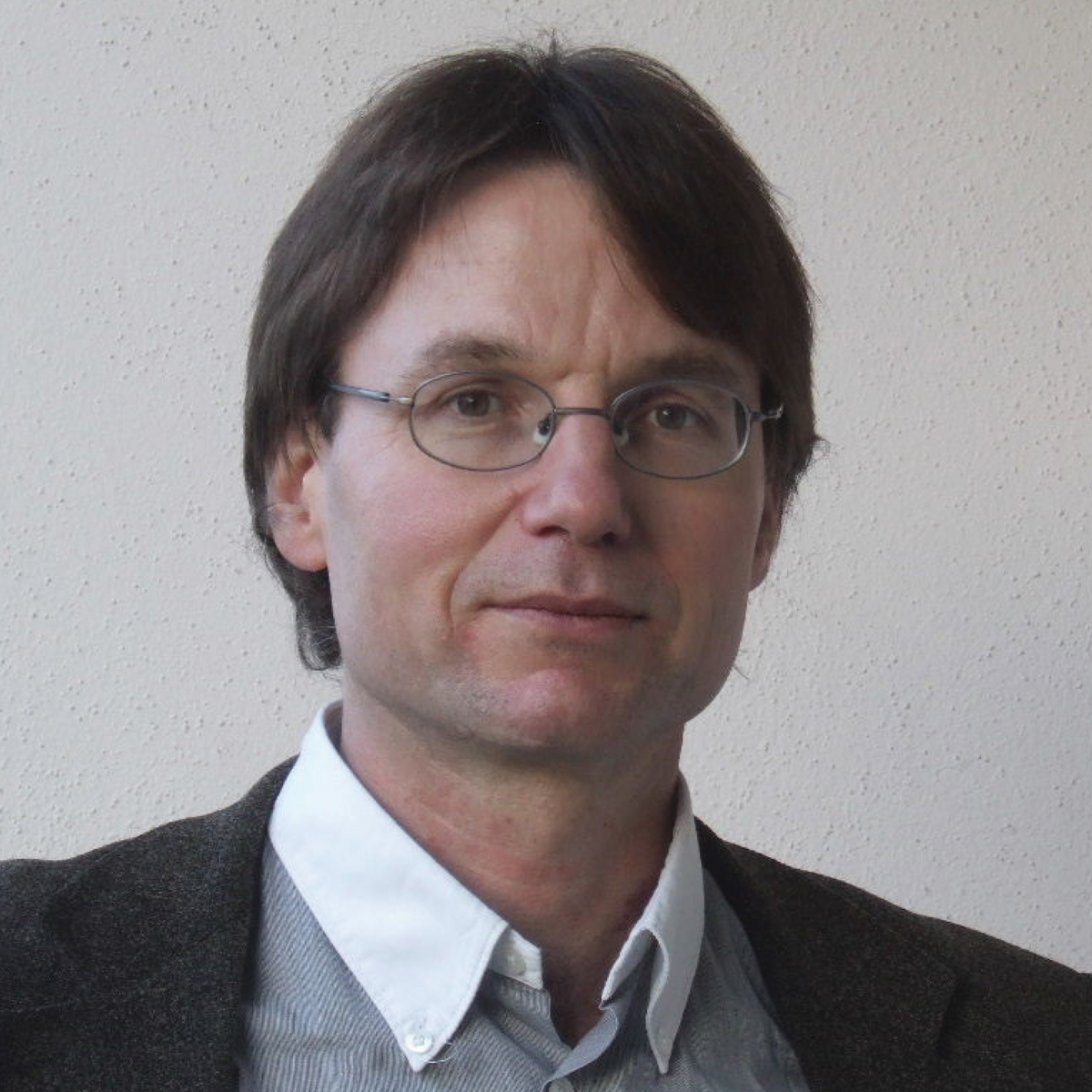
Abstract
We present new results on the stability of the Helmholtz equation with non-smooth and rapidly oscillating coefficients on bounded domains for the heterogeneous Helmholtz equation. Injectivity of the problem is proved for a large class of coefficients by the unique continuation principle, however, this does not give directly a coefficient-explicit energy estimate.
In this talk, we will present a new theoretical approach for one-dimensional and radial-symmetric problems and find that for a class of oscillatory and discontinuous coefficients, the stability constant (i.e., the norm of the solution operator applied to a r.h.s. in L2) is bounded by a term independently of the number of discontinuities.
We present examples of coefficients so that the solution has exponentially increasing local energy with respect to the frequency at any predetermined location inside the domain, showing that our estimates are sharp.

Abstract
A polycrystalline materials are agglomeration of individual crystallites (grains) joined along two-dimensional interfaces (grain boundaries or GBs). Since GBs have an excess energy compared with the crystals, GBs migrate to reduce the total GB area in the polycrystalline microstructure. If the GB energies and mobilities are isotropic, GBs move according to mean curvature flow. von Neumann demonstrated that in two-dimensions, this implies that the size (area) of any grain will evolve as (n-6) where n is the number of sides of the grain. Several years ago, MacPherson and I derived a similar results in all dimensions and showed that von Neumann’s topological result only applies in two dimensions. More recently, materials scientists have discovered by motion of defects that are constrained to move within the GBs. This accounts for the crystallographic (non-isotropic) nature of real GBs. I will demonstrate several implications of this and suggest an equation of motion for GBs that is a homogenisation of the discrete nature of true GB migration.

Abstract
The motions of viscous compressible fluids are governed the Compressible Navier-Stokes system (CNS) and its variants which are fundamental nonlinear partial differential equations in continuum mechanics. Despite its importance in both theory and applications, the general well-posedness theory and qualitative and quantitative studies of either smooth or even weak solutions to such system for general data are not well-understood except the one-dimensional case due to the complexity, strong nonlinearity, and possible degeneracy at vacuum. In fact, the vacuum dynamics is one of key issues for the global well-posedness theory. In this talk, I will survey on the major progress, some recent developments, and new challenges on the global well-posedness of both strong and weak solutions to the multi-dimensional CNS. The emphasize will be on singular behavior of strong solutions in the presence of vacuum, large amplitude (or oscillations ) solutions with possible vacuum, and weak solutions for CNS with degenerate viscosity coefficients.
© 2019 City University of Hong Kong. All Rights Reserved.