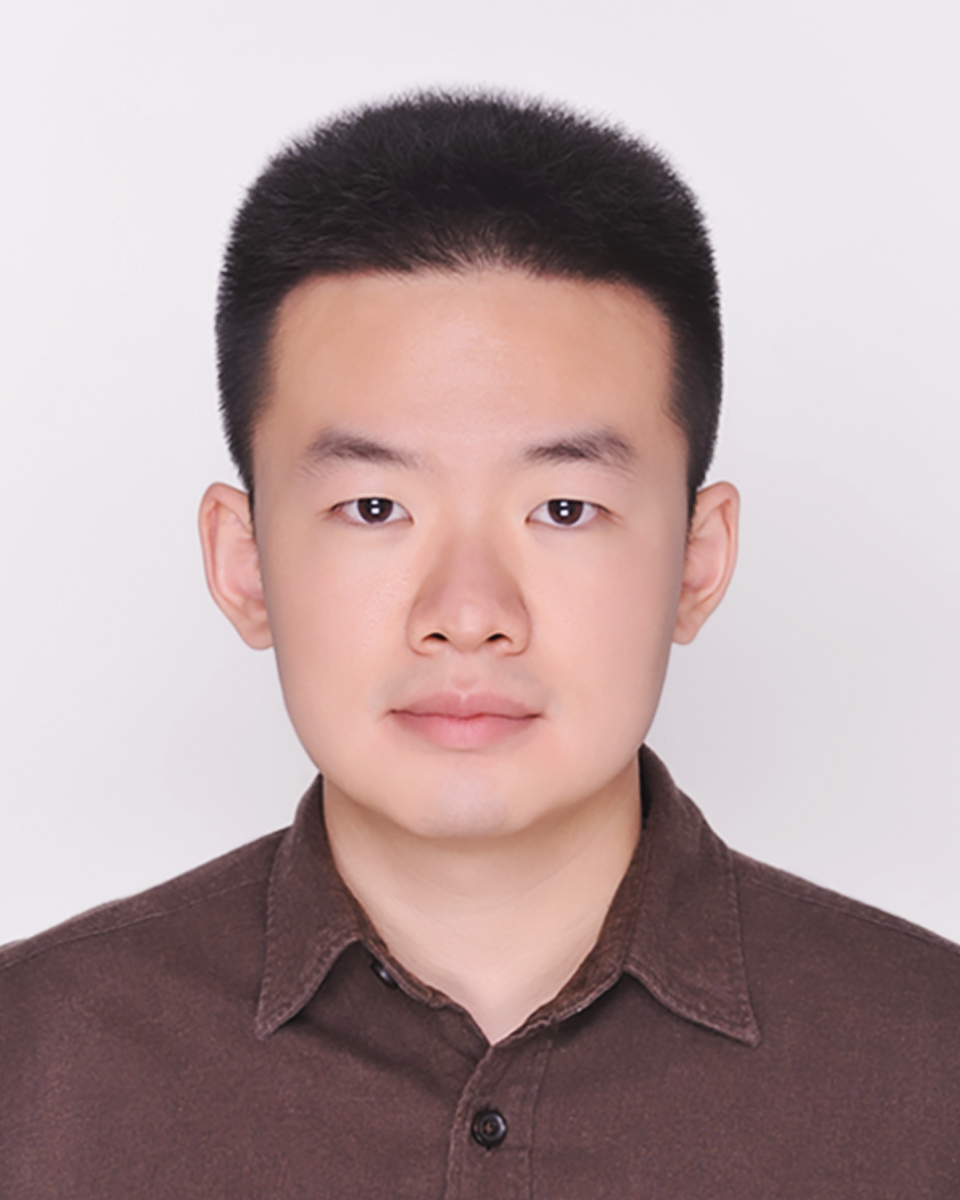
Yuheng
WU
吳宇恆
BA (Sichuan University), PhD (Shanghai Jiao Tong University), PhD Candidate (City University of Hong Kong)
Ph.D. Student
I received my first PhD from Shanghai Jiao Tong University and am currently completing a second PhD at City University of Hong Kong. My research advances a socio-psychological understanding of the similarities and differences between human–AI interaction and human–human interaction.
Education
- Ph.D. in Media and Communication (2021–present)
Department of Media and Communication
City University of Hong Kong
- Combined M.A. & Ph.D. in Communication (2018–2025)
School of Media and Communication
Shanghai Jiao Tong University
- B.A. in Advertising (2014–2018)
College of Literature and Journalism
Sichuan University
Refereed Publications
Journals' JCR information for the corresponding publication year.
- Wu, Y., & Shen, F. (2026). Machine agency attribution in human–AI interaction: Developing and validating an analytical framework. Journal of Computer-Mediated Communication. 31(3), zmag009.
- Wu, Y., Dong, Y., Mou, Y., & Kim, K. J. (2025). How the algorithmic transparency of search engines influences health anxiety: The mediating effects of trust in online health information search. In Proceedings of the 2025 CHI Conference on Human Factors in Computing Systems (CHI’25).
- Wu, Y., Kim, K. J., & Mou, Y. (2024). Minority social influence and moral decision-making in human–AI interaction: The effects of identity and specialization cues. New Media & Society, 26(10), 5619–5637.
- Dong, Y., & Wu, Y.* (corresponding author). (2024). Interacting with healthcare chatbot: Effects of status cues and message contingency on AI credibility assessment. International Journal of Human–Computer Interaction, Online First.
- 牟怡, & 吴宇恒. (2024). 从准社会关系到人机关系:基于原真性与互动性的双维度归类模型, 当代传播, 3, 9–14.
- Mou, Y., Zhang, L., Wu, Y.* (corresponding author), Pan, S., & Ye, X. (2023, online first). Does self-disclosing to a robot induce liking for the robot? Testing the disclosure and liking hypotheses in human–robot interaction. International Journal of Human–Computer Interaction, 40(10), 2534–2545.
- Mou, Y., & Wu, Y. (2023). Communicating with conversational assistants: Uses, contexts, and effects. In Guzman, A., McEwen, R., & Jones, S. (Eds.), The SAGE Handbook of Human–Machine Communication (pp. 458–465). SAGE Publications.
- Dong, Y., Chen, M., & Wu, Y. (2022). Effects of social norms and message framing on reducing the stigma of gynecological diseases: A cognitive-affective-behavioral model. Applied Psychology: Health and Well-Being, 15(4), 1221–1236.
- Dong, Y., Wu, Y.* (corresponding author), Wu, F., Mou, Y., & Ivanov, A. (2022). From Homeland-Mother to Azhong-Brother: A qualitative study of nation anthropomorphism among Chinese youths. Media, Culture & Society, 44(7), 1354–1371.
- Wu, Y., Zhang, L., Wang, J., & Mou, Y. (2021). Communicating air quality index information: Effects of different styles on individuals’ risk perception and precaution intention. International Journal of Environmental Research and Public Health, 18, Article 10542.
- Mou, Y., Cui, Y., Wang, J., Wu, Y., Li, Z., & Wu, Y. (2021). Perceiving sexual harassment and #metoo social media campaign among Chinese female college students. Journal of Gender Studies, 31(2), 178–192.
- Xu, K., Liu, F., Mou, Y., Wu, Y., Zeng, J., & Schäfer, M. S. (2020). Using machine learning to learn machines: A cross-cultural study of users’ responses to machine-generated artworks. Journal of Broadcasting & Electronic Media, 64(4), 566–591.
- Mou, Y., Wu, Y., Wang, J., Wu, Y., Li, Z., & Cui, Y. (2020). Safer sex practice among female Chinese college students and its antecedents: A culture-centered approach. International Journal of Sexual Health, 32(3), 282–292.
- Wu, Y., Mou, Y., Li, Z., & Xu, K. (2020). Investigating American and Chinese Subjects’ explicit and implicit perceptions of AI-Generated artistic work. Computers in Human Behavior, 104, Article 106186.
- 吴宇恒, 饶广祥, & 牟怡. (2020). “沉默”在理性诉求视频广告中的认知心理研究——基于ELM的眼动实验证据. 夏倩芳 (Ed.), 中国网络传播研究(第13辑):在线媒体的使用与效果 (pp. 28–46). 中国传媒大学出版社.